We provide full-stack scientific and engineering infrastructure—from ethics and privacy to data architecture to research design—so breakthrough innovations can move from discovery to delivery.
Federal and philanthropic investment in education R&D is growing. AI is creating new possibilities. The science of learning has never been stronger.
But the field lacks the infrastructure to translate investment into impact.
In biomedicine, billions flow through an ecosystem of specialized firms providing clinical trial design, regulatory navigation, data management, and manufacturing scale-up. Researchers don't build this infrastructure themselves—they access it.
Education has nothing comparable.
The result: brilliant researchers can't get innovations out of the lab. Promising edtech can't earn district trust. Well-funded programs stall because the expertise they need—privacy law, secure data infrastructure, ethical protocols, scientific rigor—is sparse, expensive, and fragmented.
We're building what's been missing.
SETA-ED is the impact engineering firm for K-12 education R&D.
We provide the complete scientific, engineering, ethical, legal, and technical infrastructure that transformative R&D requires—so your team can focus on the breakthrough work while we handle the complex machinery that makes it possible.
Think of us as the engineering backbone for education innovation.
A new field that applies engineering rigor to create measurable educational impact. Just as biomedical engineering transformed medicine, impact engineering transforms how learning innovations are created, tested, and scaled.
Explore Impact Engineering →End-to-end infrastructure across the entire R&D lifecycle. Forming a research project (pitching, IRB approval, pre-registration). Data architecture. Flexible development environments. Research partnership support. We provide the complete stack—not single point solutions.
Explore R&D Infrastructure →Discovery to Delivery: our pathway moves innovations from research insight to classroom reality. Five stages. Continuous infrastructure. Breakthrough results.
Explore D2D Framework →We believe any personal data worth collecting is worth protecting, and that teams should be proactive in their approaches to ensuring and upholding safety, privacy and security, rather than reactionary methods.
Explore Safety & Compliance →Let's build the infrastructure your innovation deserves.
Start the ConversationComprehensive infrastructure solutions to transform educational innovations from concept to real-world impact
Our Discovery to Delivery framework ensures your innovation journey is structured, measurable, and aligned with real-world educational outcomes.
Learn More →Design and optimize educational interventions with rigorous methodology that proves efficacy and drives meaningful change at scale.
Learn More →Build robust research and development systems with proper data architecture, experiment design, and analytical frameworks.
Learn More →Navigate ethics, privacy, and regulatory requirements with confidence while protecting learner data and institutional integrity.
Learn More →A coherent, full-stack pathway to move safe, evidence-backed solutions from insight to classroom impact.
Without a D2D approach, K–12 innovation stalls in pilots and exposes teams to risk. With impact engineering, you move from scattered efforts to a coherent, full-stack pathway that gets safe, evidence-backed solutions into classrooms.
See the problem clearly.
We help you identify the right problems, surface insights from the field, and shape strong proposals through landscape analysis and strategic design support.
Co-create what works.
We co-design solutions with educators, students, and families, and architect research and measurement plans so your ideas are grounded in real needs and real-world constraints.
Build on solid infrastructure.
We stand up secure cloud and data infrastructure, design technical architectures, and iterate prototypes so your solution can handle real data and real risk.
Prove impact responsibly.
We design and execute evaluations, navigate IRB and ethics, and generate credible evidence that shows how your solution performs and for whom.
Sustain and scale in practice.
We develop implementation playbooks, support ecosystem navigation, and help you build the conditions for sustainable adoption in schools and systems.
Let's discuss how the D2D Framework can compress your timeline from discovery to classroom impact.
Get In TouchJust as biomedical engineering transformed medicine, impact engineering transforms how learning innovations are created, tested, and scaled.
We know more about how people learn than at any point in human history. Cognitive science, neuroscience, social and affective science, and the learning sciences have produced robust insights that could meaningfully improve outcomes for students. Federal and philanthropic investment in education R&D is growing and AI is creating new possibilities. Yet the gap between what we know and what reaches classrooms remains vast. Promising interventions stall in pilot programs. Edtech products launch without evidence of efficacy. Researchers struggle to translate findings into usable tools. The problem isn't discovery—it's delivery. What education lacks is its own engineering discipline: a systematic approach to moving innovations from insight to impact.
Just as biomedical engineering transformed medicine, impact engineering transforms how learning innovations are created, tested, and scaled.
Our team of educational neuroscientists and learning scientists help research and product teams infuse what has been learned through neuroscience and learning science into practice. This includes identifying pedagogical theories of change, developing logic models, incorporating executive function research into product development.
We help researchers and edtech developers co-design projects with communities, students and teachers. This process incorporates the student and educator voice into new developments, ensuring that those new developments are actually useful, usable and effective.
The Total Learning Architecture (TLA) is a standards-based data architecture designed to support the flow of data through modern learning and training technology ecosystems. Our team of learning engineers help edtech developers implement the TLA into their product designs to close the loop on learner efforts and achievements through continuous tracking of learner activities, competencies, and achievements.
Knowledge tracking is the fundamental mechanism for modeling and analyzing learner states. The goal for any learning activity is for the learner to obtain mastery of a given topic, concept or skill, and mastery is often defined by a set of competencies. In bringing together knowledge tracing and competency frameworks, we help teams model and ultimately optimize learner paths to achieving mastery.
Our team of education researchers, neuroscientists, learning scientists and project managers partner with edtech organizations or R&D portfolios to curate and conduct research projects. These research projects are designed to uncover the effective and non-effective components of a learning intervention or learning product, and study the logic models/theories of change that lead to better student outcomes.
Data storytelling is the practice of combining data analysis with narrative techniques to communicate insights in a way that is both informative and compelling. It transforms raw numbers and statistics into meaningful stories that resonate with audiences, drive understanding, and inspire action. Rather than simply presenting data, data storytelling creates a coherent narrative that explains what the data means, why it matters, and what should be done about it.
Our team has extensive experience at leading R&D portfolios, and can rapidly identify which interventions/products are impactful and shift the ones that are not. We can provide all of our service offerings at both the project and portfolio levels. We encourage folks to optimize the power of the portfolio through integrative analytics and economies of scale.
Let's discuss how our impact engineering solutions can transform your educational innovation.
Get In TouchFull-stack infrastructure to conduct inclusive R&D with students and schools and translate research outcomes into practice.
Education R&D has many inherent challenges, including piloting prototypes in secure environments, managing student data, complying with IRBs and state/district data privacy standards, and transitioning prototypes from testbeds to real operational environments, and these challenges are additionally met with an extremely low tolerance for failure.
Our Full-Stack R&D Infrastructure provides everything you need to conduct inclusive R&D with students and schools and translate research outcomes into practice.
Develop online learning prototypes in secure cloud or hybrid environments, with flexible analytics, compute and data storage. These enclaves allow you to seamlessly go from development to pilot to launch.
We support you in end-to-end data management (from collection to analysis to retention). We help guide research teams in developing reproducible research data (with complete data documentation and codebooks), implementing data standards, and implementing data privacy and security-by-design (e.g., centralized data access controls, secure portals for collecting, compliant sharing of research data, automated data destruction and retention policies).
Education R&D falls under human-subjects research, which are governed by institutional review boards (IRBs). Even UX/UI, co-design projects and human factors research will fall under IRB requirements, especially when working with students or minors. We help researchers and edtech developers looking to study their products structure their pre-analysis plans and navigate IRB applications. Our process often reduces IRB turnaround times from months to a few weeks, and in some cases a few days.
We help researchers and edtech developers co-design research projects with communities, students and teachers. This process is coined Inclusive R&D, and when done effectively, it can reduce the total number of R&D cycles needed to produce effective results and translate those results into practice.
Our team of student data privacy experts help to guide researchers and edtech developers in navigating the necessary legal and compliance documentation (e.g., Privacy Policies, Data Sharing Agreements, Consents, FERPA exceptions for research), including providing templates and incorporating state/district/local specific requirements.
We design and compile real operational or synthetic testbeds that bring together real educational settings and participants, enabling rigorous evaluation of education research and emerging edtech. These testbeds let researchers and developers test, refine, and validate innovations in real or realistic learning environments.
We provide secure analytics environments purpose-built for education research, combining strict privacy and governance controls with flexible compute for a wide range of analytics tasks. These environments can host diverse analytic tooling suites—such as Python notebooks, RStudio, SQL workbenches, and visualization or ML tools—so researchers can safely work with sensitive student data, including PII, while meeting regulatory and institutional requirements.
We offer transition support to translate research outcomes and developed products into real-world practice, helping schools and learning organizations adopt, adapt, and sustain evidence-based innovations. Our support bridges the gap between research and implementation through piloting, stakeholder engagement, and practical integration into learning environments.
Let's discuss how we can support your research and development initiatives with secure, compliant infrastructure.
Get In TouchScale safely and securely with proactive risk management that unlocks your product's fullest potential.
Whether you're piloting a new product in a few classrooms or scaling a product to millions of learners across the nation, ensuring safety and trust are paramount, but so often the means to achieving that safety and trust are treated as after-thoughts, rather than proactive risk management.
We help education technology scale safely and securely in a way that not only minimizes risk, but actually unlocks a product's fullest potential for usability and scalability, ultimately maximizing the return on investment.
Our team of child and student data privacy experts can help you navigate federal, state and local data privacy laws and regulations. SETA-ED's team of privacy experts works closely with clients to ensure that project terms, including contracts and R&D grants, align with IRB requirements, data sharing agreements, and other applicable privacy laws and regulations. Our team continuously tracks and analyzes federal, state, and local legislative and regulatory landscapes to identify developments that may impact the R&D field, enabling us to provide comprehensive risk analysis and mitigation strategies for our clients. We provide state-level privacy assessments to identify state-specific laws and regulations, which are essential for vetting potential district, research, or vendor partnerships.
R&D is inherently high risk, high reward, therefore project and portfolio managers need to identify risks, categorize them and ensure effective mitigation strategies are put into place. Our risk analysis process provides program and project teams support in navigating ethical, security, privacy and safety risks. R&D in the U.S. is held to a high level of ethical standards, especially when the R&D involves vulnerable populations, such as children. SETA-ED provides protocols and practices for ensuring there is a high level of ethical rigor across portfolios. We provide a streamlined process for funding new ventures, R&D teams, or edtech companies, with the necessary due diligence to ensure that teams are aware of and meet threshold requirements for child safety, ethical research practices, data privacy and data protection. This process is aligned to easily accommodate both 'traditional' research (appropriate to standard IRBs) and 'non-traditional' research/R&D such as UX/UI and design-based research.
Our privacy and security scans assess the data collected through an application or passed over a network, scrutinizing both its usage and compliance with legal standards for children's privacy. These scans meticulously evaluate whether the application's data handling practices adhere to stringent privacy regulations designed to protect minors. By ensuring legal compliance, these evaluations play a crucial role in safeguarding children's privacy in digital environments.
SETA-ED acts as a trusted advisor and program manager to guide our clients in designing and implementing robust information security programs, and navigating 3rd-party compliance audits (e.g., SOC 2 Type II, ISO 27001, CMMC). We help clients assess their current information security readiness, implement or improve their technical and operational security controls, collect evidence of control implementation and effectiveness, and guide clients end-to-end through 3rd-party audits. SETA-ED's team of student data privacy experts, network and security engineers, and program managers have extensive experience in building and managing safe and secure data infrastructures and ensuring compliance with the specific standards required for operational readiness.
SETA-ED's privacy team is a mix of legal and technical experts, who work closely as a data governance team to implement and automate data privacy and protections. We automate compliance and data privacy assurance through the design and use of Privacy Enhancing Technologies (PETs). Depending on the data and the project at hand, a number of PETs may be designed and leveraged (e.g., PII vaults, automated data de-identification, synthetic data generation).
SETA-ED has developed an AI Safety Framework to assess and mitigate potential risks from student use of AI in operational contexts. Our AI Safety Framework includes a Risk Assessment Matrix, an AI Testing and Evaluation Toolkit, and Guardrail Development and Implementation.
Our team offers customizable security and privacy trainings tailored to your organization's specific needs. These comprehensive programs equip your staff with the knowledge and skills necessary to maintain compliance with data protection regulations, implement best practices for safeguarding student information, and foster a culture of security awareness throughout your organization.
Let's discuss how we can help you build proactive risk management into your educational technology.
Get In TouchSupporting diverse stakeholders across the education innovation ecosystem
For-profit and non-profit educational technology companies building the next generation of learning solutions. We help you validate efficacy, scale with confidence, and prove impact.
Empowering educators and learners with evidence-based tools and methodologies. We ensure innovations serve those at the heart of education.
Supporting public education systems with infrastructure for data-driven decision making, compliance management, and program evaluation at scale.
Venture capital firms and philanthropic organizations investing in education. We provide due diligence, portfolio support, and impact measurement frameworks.
SETA-ED was founded on the belief that breakthrough educational innovations deserve the same rigorous infrastructure that powers advances in science, medicine, and technology.
We're a team of scientists, engineers, researchers, and education experts who understand both the promise of innovation and the complexity of implementation.
Scientific rigor meets educational context
End-to-end infrastructure support
Real outcomes for real learners
Every child is brilliant, and neuroscience reveals that they are learning every second of every day. Thus, we do not actually need to teach kids how to learn, but instead we envision bringing together researchers, engineers, educators, students and communities to co-create learning environments that support the optimal growth and development for every child.
Experienced leaders dedicated to transforming education R&D
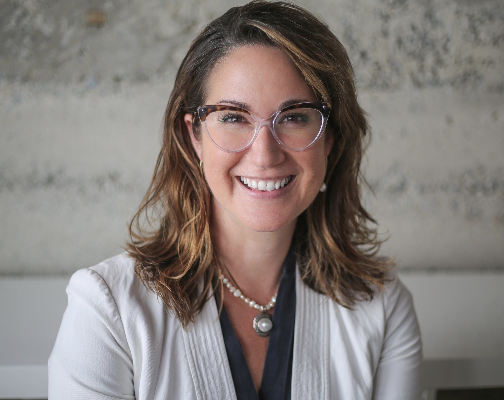
Dr. Melina Uncapher is the founder and CEO of SETA-ED, and a former university professor of educational neuroscience, most recently with labs at Stanford and UC San Francisco. She was a co-founder and Chief of R&D of AERDF, one of the premier education R&D nonprofits in the US. Uncapher has over two decades of experience in scientific research, technology development and engineering, data science, and data privacy and security. She brings together educators, researchers, and developers to co-create transformative solutions to problems of practice using rigorous science-of-learning insights and the wisdom of educators. Her academic publications have been cited over 4000 times, and are highlighted in outlets including the New York Times, PBS, and Frontline; her science outreach work includes a Script Supervisor role on PBS's ‘The Brain’, and an award-winning short film about the brain. She founded a multi-university network funded by the National Science Foundation to study how executive function skills develop in real-world classrooms and co-founded a science-for-good nonprofit that equips educators and students with practical tools based on learning science. She was also funded by the National Institutes for Health to study how technology use is associated with developmental changes in student cognition. She earned her PhD in Neurobiology from the University of California, Irvine and completed postdoctoral fellowships at Stanford University.
Connect on LinkedIn

Ivy Sandberg is SETA-ED’s Chief Operating Officer and Engineering Program Manager. Ivy is a data scientist by training, with dual degrees in Statistics and Economics. She has contributed to AI/ML program evaluations for the Defense Advanced Research Projects Agency (DARPA). Through her support of R&D programs in both the DoD and the education space, she has experienced first-hand the need for data governance, ethical frameworks, and strategies for implementing privacy and security by design, specific to R&D. While still an active contributor to data science projects, Ivy has pivoted her focus towards building ethical R&D infrastructures supportive of data science work, particularly for research domain areas that are often working with sensitive data (e.g., education, medical or defense programs). Ivy’s technical and engineering skillset maps the legal, privacy and ethical frameworks into technical and automated solutions to advance R&D for education.
Connect on LinkedInReady to transform your educational innovation? Let's start a conversation.